
Painted from a window he could not leave
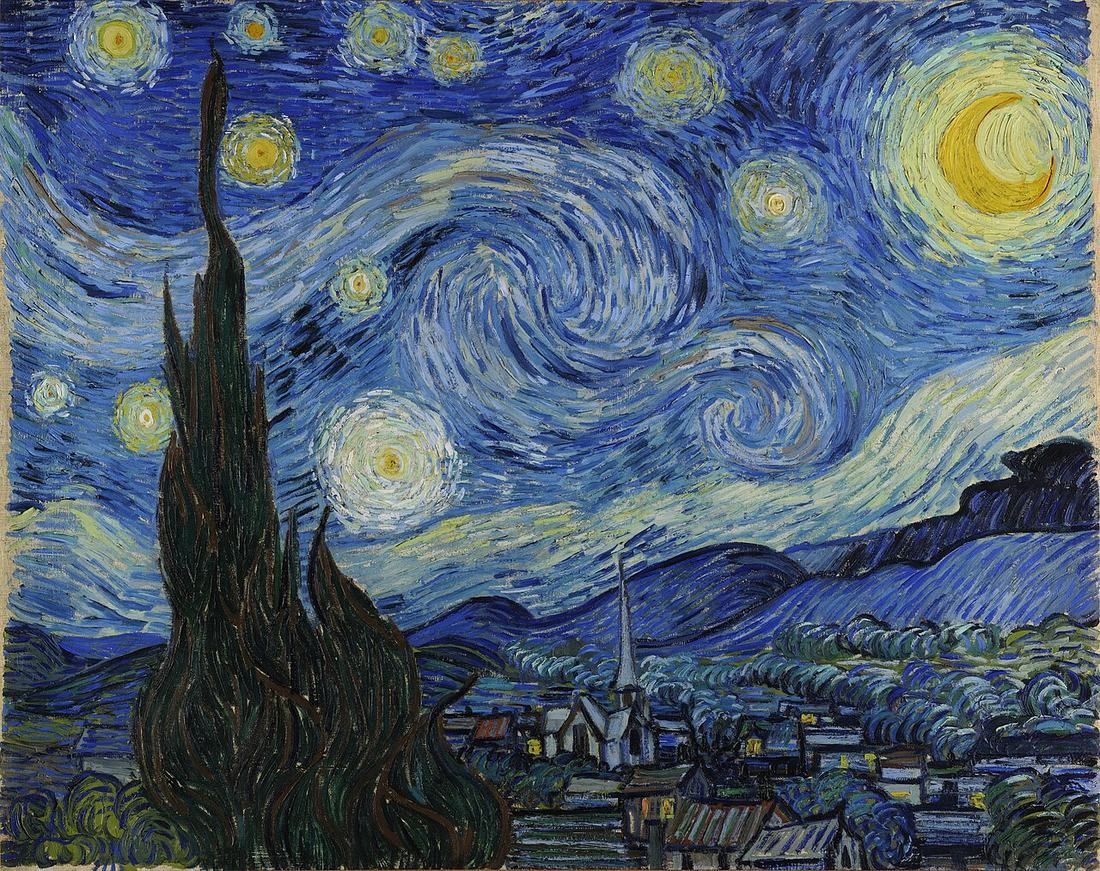
In May 1889 Van Gogh admitted himself to the asylum of Saint-Paul-de-Mausole at Saint-Rémy-de-Provence. He was given two rooms and the run of the grounds, and in the middle of June he painted the view east from his bedroom window before sunrise.
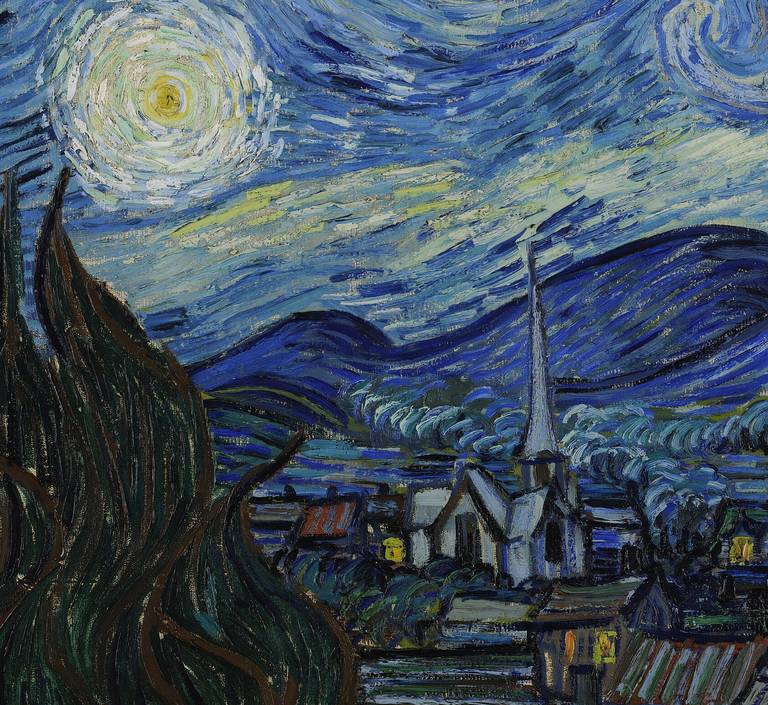
The ridge, the cypress and the morning star were in front of him. The village was not: there is no church with that spire at Saint-Rémy. It belongs to Holland, and to memory.
The part of the picture that looks invented is the part he was looking at. The part that looks ordinary is the part he made up.
The painter thought it had not worked
Van Gogh's own verdict on the picture, in the letters he wrote to his brother Theo and to Émile Bernard that year, was cool at best. He filed it among the studies where he had pushed too far, and moved on. The correspondence is published in full by the Van Gogh Museum, and it makes uncomfortable reading if you assume great pictures announce themselves to the people who paint them.
Quality and price are related, but loosely — and they are decided by different people, at different times.
It did not sell, and that means nothing
He sold very little. The line you will hear — that he sold exactly one painting — is a tidy exaggeration, but not by much; he lived on money from Theo, an art dealer who could not move his brother's work either. It was Theo's widow, Johanna van Gogh-Bonger, who spent the next four decades putting the pictures in front of people and built the reputation.
MoMA bought The Starry Night in 1941 through the Lillie P. Bliss Bequest. Its own press release calls the picture outstanding but “comparatively little known”, having sat in a private Dutch collection. The most famous night sky in Western art was, in 1941, one most people had not seen.
How a painting becomes an image
What happened after 1941 is not connoisseurship, it is reproduction: posters, book jackets, album covers, a Don McLean song, screensavers. Fame of this kind compounds, and the name travels with the picture even to people who never ask for it.
The same mechanism runs in the part of the market you might actually transact in. An artist with a following, a museum show, a monograph and a dealer who keeps the record tidy is worth more than an equally able artist with none of those things.
You are not only buying a painted surface. You are buying the attention already attached to it.
So what is it worth?
Nothing, strictly, and everything. There is no price because there is no market — MoMA is not selling, so no buyer has ever had to say what they would pay. When a museum needs a figure anyway, to lend or move a work, it agrees one with the lender and the state. That is a policy limit, not a price.
The honest comparison is what Van Goghs of similar standing have fetched. Portrait of Dr Gachet made $82.5m in 1990; Verger avec cyprès took $117.2m at Christie's in November 2022 and holds the record. Those are real numbers with real bidders behind them.
- Market value needs a willing buyer and a willing seller. Remove either and there is no figure, only an opinion.
- Insurance value is an agreed limit — what would be paid on a loss, not what the work would fetch.
- Comparable sales are the only figures with evidence behind them. Prefer three consistent results to one dramatic one.
What an owner should take from this
That the artist's own opinion is interesting and not decisive; that what a work sold for when it was made describes that market, not this one; and that a figure only exists where a market does — which is why an unattributed canvas in a loft is worth nothing until someone establishes the hand, and may then be worth a great deal.
Photograph yours with the Art Identifier for a likely hand, period and range. Treat it as an orientation. The house examines nothing, authenticates nothing and issues no certificates, and every figure it gives is indicative — for one an insurer or a buyer will act on, you want an independent appraiser in front of the picture.