
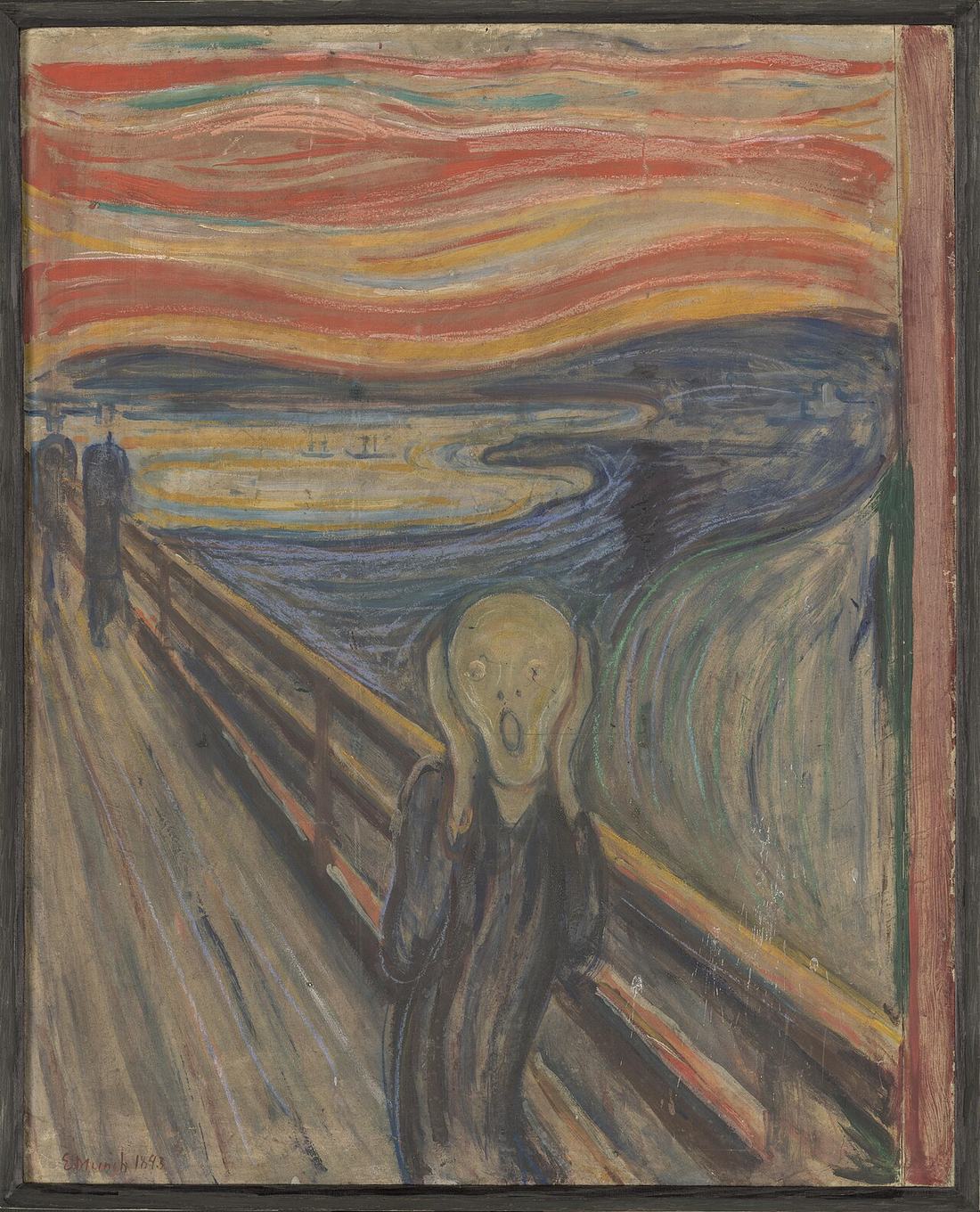
First, establish which one you mean
The Scream is not a painting but a motif Munch returned to for twenty years, and the versions are different objects in different media. Two are painted — the 1893 version in Oslo's National Museum and a later one in the Munch Museum. Two are pastels, of which the 1895 sheet was the only version in private hands. And there is a lithograph of 1895, from which a number of period impressions survive.
“How much is The Scream worth?” has four correct answers. One of them is $119.9m. Another is about the price of a small car.
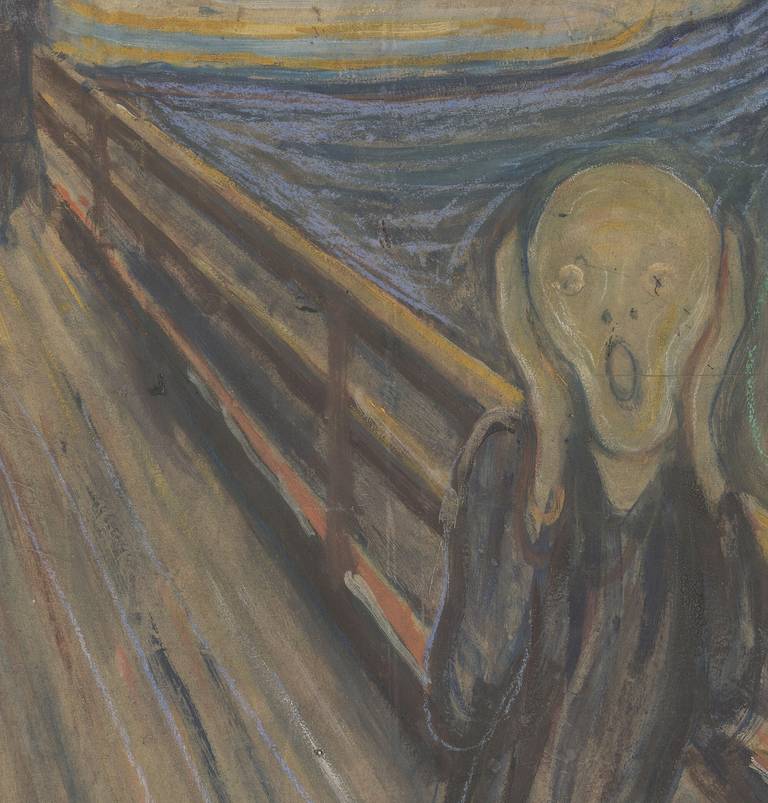
The one sale: $119.9m, Sotheby's, May 2012
On 2 May 2012 Sotheby's New York offered the 1895 pastel, estimated at about $80m. Two bidders took it to $107m on the hammer — $119,922,500 once the buyer's premium was added — and for a time it was the most expensive work of art ever sold at auction.
Those two numbers are the most commonly muddled pair in the market. The hammer is what the bidding reached; the second figure is what the buyer actually paid. Sellers are quoted the first and buyers write cheques for the second, and on any lot you are likely to touch the gap is 20% to 30%.
Stolen twice, recovered twice
In February 1994 thieves took the 1893 painting from Oslo's National Gallery, reportedly leaving a note thanking the museum for its poor security; it was recovered within three months. In August 2004 armed men walked into the Munch Museum in daylight and took the painted version along with Madonna. Both were missing for two years before Oslo police recovered them in 2006, largely undamaged.
Normally a break in an artwork's custody costs money — gaps in provenance make buyers nervous. A famous theft is the exception: nothing was lost, the chain of ownership was never in doubt, and the notoriety stuck to an object whose fame was already the point. An unrecorded painting that quietly changed hands three times with no paperwork has the real version of that problem.
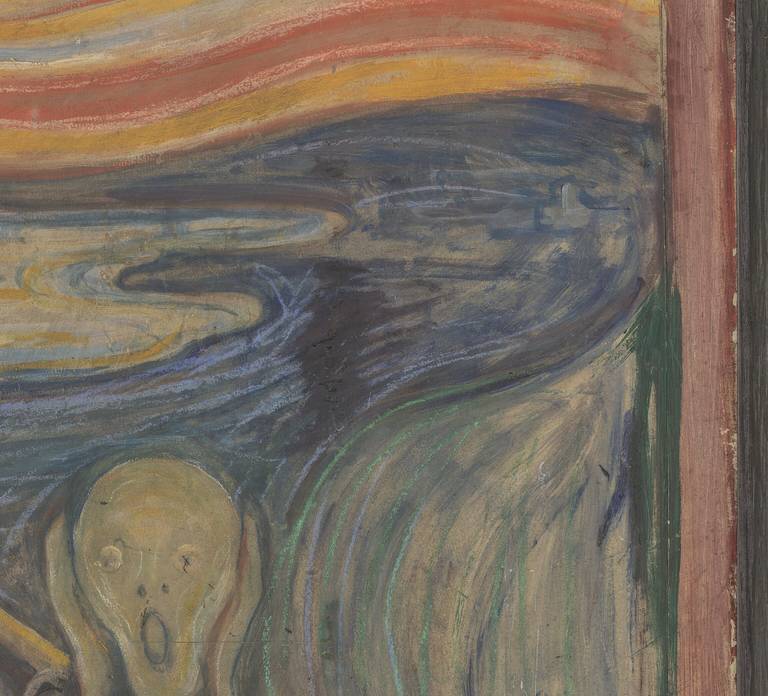
The lithograph is where most people meet the question
If someone believes they own a Scream it is almost always the lithograph or a reproduction of it. Munch's 1895 lithograph is a genuine original print — an artwork made as a print, not a photograph of a painting — and period impressions, some hand-coloured, come up at auction periodically. They sell for serious sums, and for a small fraction of the pastel.
Below that sits everything else: restrikes, photomechanical reproductions, museum posters, giclée on canvas sold as “museum quality”. The difference is not how it looks from three feet away. It is how the ink got onto the paper.
Under a loupe, a reproduction breaks into a regular grid of dots. A lithograph shows continuous, grainy tone with the stone's own texture in it.
- Original print: made as a print by the artist, from a stone, plate or block. Can be extremely valuable.
- Reproduction: a photograph of another artwork, printed. Worth the framing at most, whatever the certificate says.
- The test is the surface under 10× magnification, not the paper's age or the signature.
What this teaches about anything you might own
Two things that look identical in a photograph — same composition, same colours, same size — can differ in value by a factor of a thousand, because one is a unique work in pastel and the other came off a press. Before asking what something is worth, settle what it physically is.
A photograph goes a long way towards answering that, and a photograph is what the Art Identifier reads: likely hand, period, medium and a range to start from. It is an estimate, not a valuation. The house examines nothing in person, certifies nothing and appraises nothing — where real money turns on the answer, get an independent print specialist to look at the object.
An image is not an asset. The object is.