
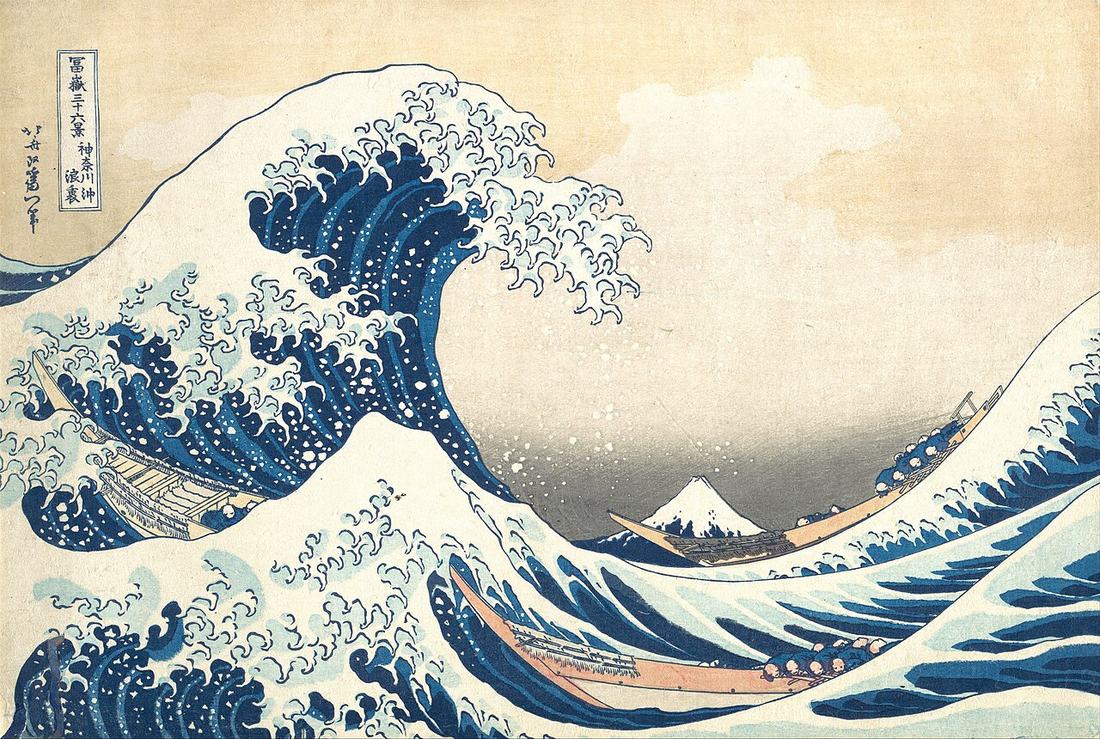
It is a print, and that is the whole point
Under the Wave off Kanagawa was published around 1831 as the first sheet of Hokusai's Thirty-six Views of Mount Fuji: a commercial colour woodblock print, pulled by a publisher in an edition limited only by demand and by how long the blocks lasted. Estimates of the original run sit between five and eight thousand impressions, of which several hundred survive, mostly in museums.
The image is not rare. It is one of the least rare images in the history of art.
What a record actually buys
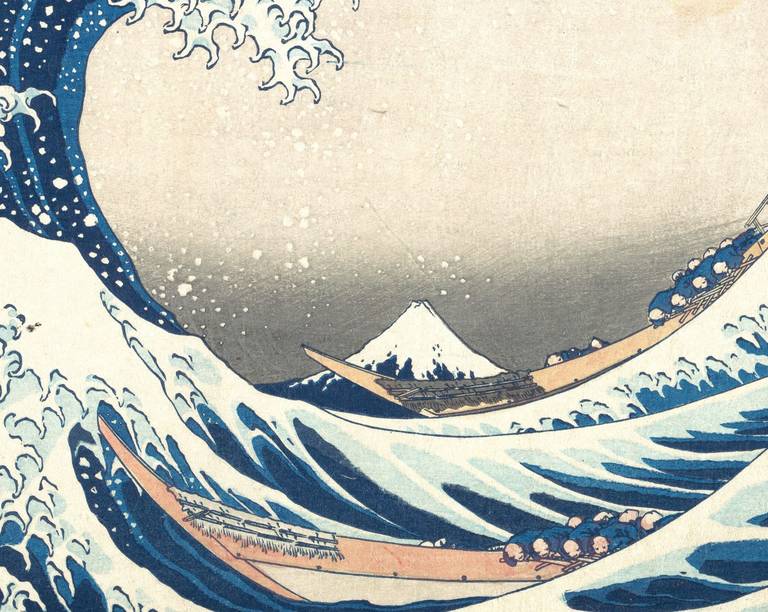
In November 2025 Sotheby's Hong Kong sold a Great Wave for HK$21.7m, about $2.8m and nearly three times its high estimate, from the Okada Museum. That beat the $2.76m paid at Christie's New York in March 2023, itself described as being in the finest condition of the few examples outside museums.
Both were early impressions in exceptional state. Early matters because woodblocks wear: the first sheets show crisp keyblock lines and clean gradation, while late printings have blurred outlines, recut blocks and no subtlety left in the sky.
Two impressions from the same blocks, one early and one late, are different objects commercially. The gap is measured in multiples, not percentages.
The four things that set the price
In the order a specialist weighs them: impression, state, colour, condition. Impression is how early and how well the sheet was pulled. State is which version of the blocks it came from, since the Great Wave was reprinted for decades and the blocks were recut. Colour is whether the blues have held, because these pigments are fugitive and a sheet left in daylight for fifty years is a paler, cheaper object. Condition covers trimming, backing, tears, foxing and repairs.
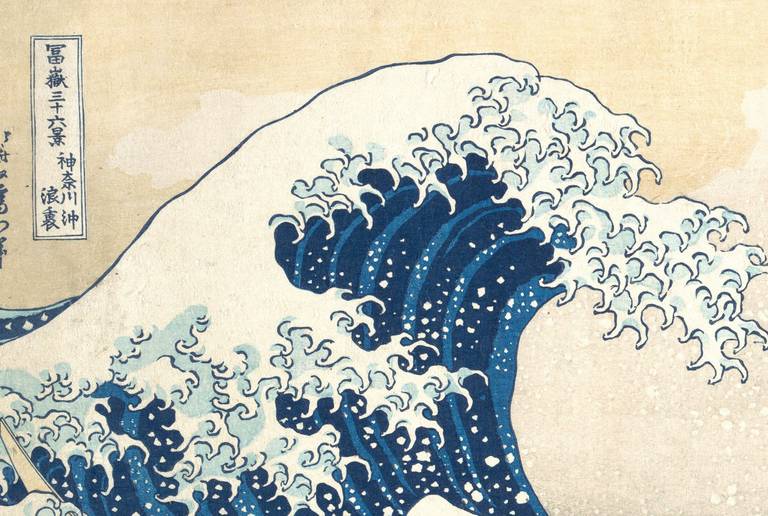
Note what is not on that list: the signature and the seal. Both are printed rather than written, so they appear on every impression including the poor ones and most of the fakes. They tell you what the sheet claims to be, not which of the several thousand it is.
- Impression: early pulls show sharp keyblock lines and clean gradation in the sky.
- State: original 1830s blocks, a later recut, or a twentieth-century restrike — three different markets.
- Colour: unfaded Prussian blue and a full range in the sky. Fading is the commonest silent discount.
- Condition: original margins uncut, no backing, no repaired tears through the wave.
How to tell what you have
Take the sheet out of the frame if it is safe to, and look at the back. A woodblock print is pressed into damp paper by hand, so the ink penetrates — you will usually see the design faintly from the reverse, on soft, fibrous washi. A photomechanical reproduction sits on top of a smooth, bright, machine-made sheet and shows nothing behind.
Then look at the front under a 10× loupe: flat areas of colour with a hard edge where the block ended, sometimes with an impression you can feel. A reproduction breaks into a regular rosette of dots. And if there is a pencil signature, be more suspicious rather than less — a “signed” Great Wave is a nineteenth-century impossibility.
The lesson worth keeping
Prints are where owners go wrong in both directions. Plenty frame a museum-shop poster and hope. A smaller number have a real nineteenth-century impression in a drawer and treat it as decoration — in the light, on acidic board, slowly losing the blue that most of its value is stored in.
For a starting point, photograph the sheet with the Art Identifier and use the Art Print Value Calculator for the edition arithmetic. Both give indicative figures. The house examines nothing in person, certifies nothing and appraises nothing — for a Japanese print with real money in it, speak to the specialist print departments at the auction houses, who will look at the paper and tell you which impression you are holding.
Multiples are not lesser artworks. They are artworks whose value lives in the object rather than the image.